
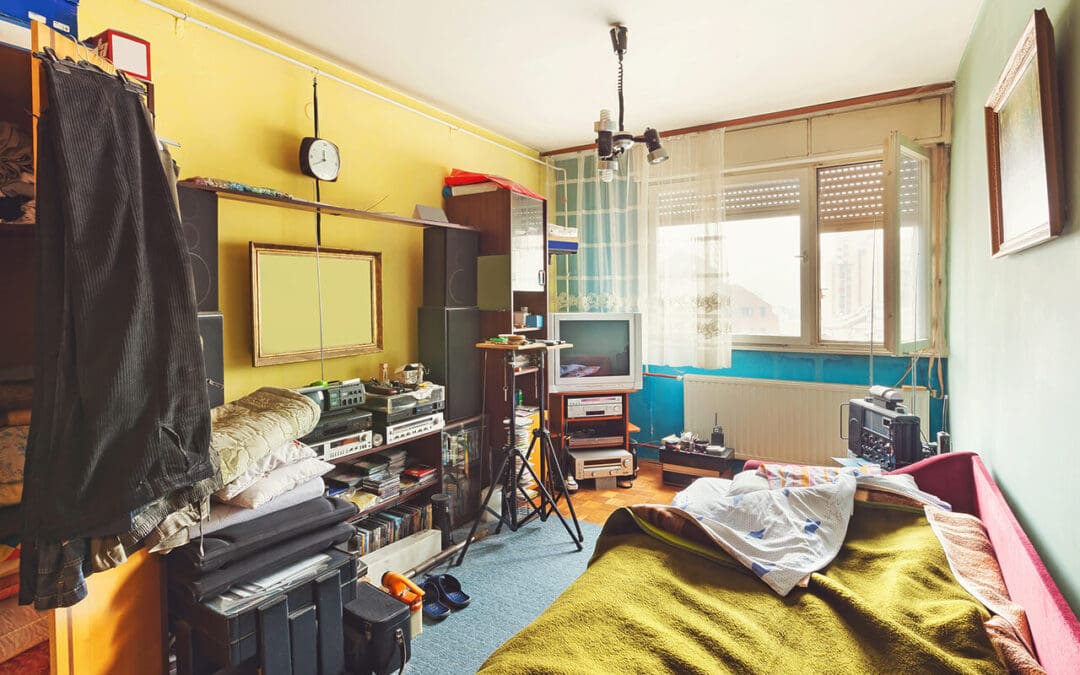
Decluttering your home is a project that most people either avoid entirely or approach all at once, which is why it rarely gets finished. The all-at-once approach pulls every room apart simultaneously, creates a home that looks worse before it looks better, and runs out of energy before the last pile gets sorted. The avoidance approach means the clutter stays exactly where it is while the intention to deal with it accumulates alongside it. The approach that actually works is sequential: room by room, with a clear starting point, a defined scope, and enough early momentum to carry through to the spaces that are harder to tackle.
Start Decluttering Your Home Where It Bothers You Most
The most effective starting point for decluttering your home is the space whose disorder causes the most daily friction. Starting there rather than with the easiest space produces something the easy-first approach doesn’t: visible, meaningful improvement in the place that matters most to you. That improvement is what generates the motivation to continue into the next space. Decluttering gains momentum from success, not from strategy, and the first space should be one where success is unmistakable.
Work in Defined Sessions, Not Marathon Days
Decluttering your home one room at a time works best when each session has a defined scope and a defined end. Committing to a single drawer, a single shelf, or a single category within a room, and finishing that scope before stopping, is more productive than spending a full day pulling everything out and losing the energy to sort and return it before the session ends. Incomplete decluttering creates a different kind of disorder, and a completed small scope is more valuable than a half-finished large one. Two hours of focused, finished work is worth more than a full day that ends with things in piles.
The Four-Category Sort That Works for Every Space
Every item encountered during decluttering your home fits into one of four categories: keep and return to its place, donate or sell, relocate to where it actually belongs, or discard. The specific containers, a bag for donations, a box for relocations, a trash bag for discards, should be in the room before sorting begins, so no decision gets deferred to “later” because there’s nowhere to put it. The relocation box gets emptied at the end of each session, returning every item to its actual home in the house rather than creating a staging area that becomes its own clutter problem.
The Habit That Keeps Decluttering Your Home From Starting Over
The temptation when decluttering your home is to move to the next room the moment the current one is finished. The habit that preserves the work is spending two minutes at the end of each day returning what drifted back into the newly decluttered space before it becomes a new layer of accumulation. A space that stays decluttered for two weeks is a space that has been genuinely transformed, and that track record of maintained success is what makes tackling the next room feel achievable rather than futile.
Integrity Inspections offers home inspections in Greene County, Tennessee, and surrounding areas. Contact us to schedule your inspection today.